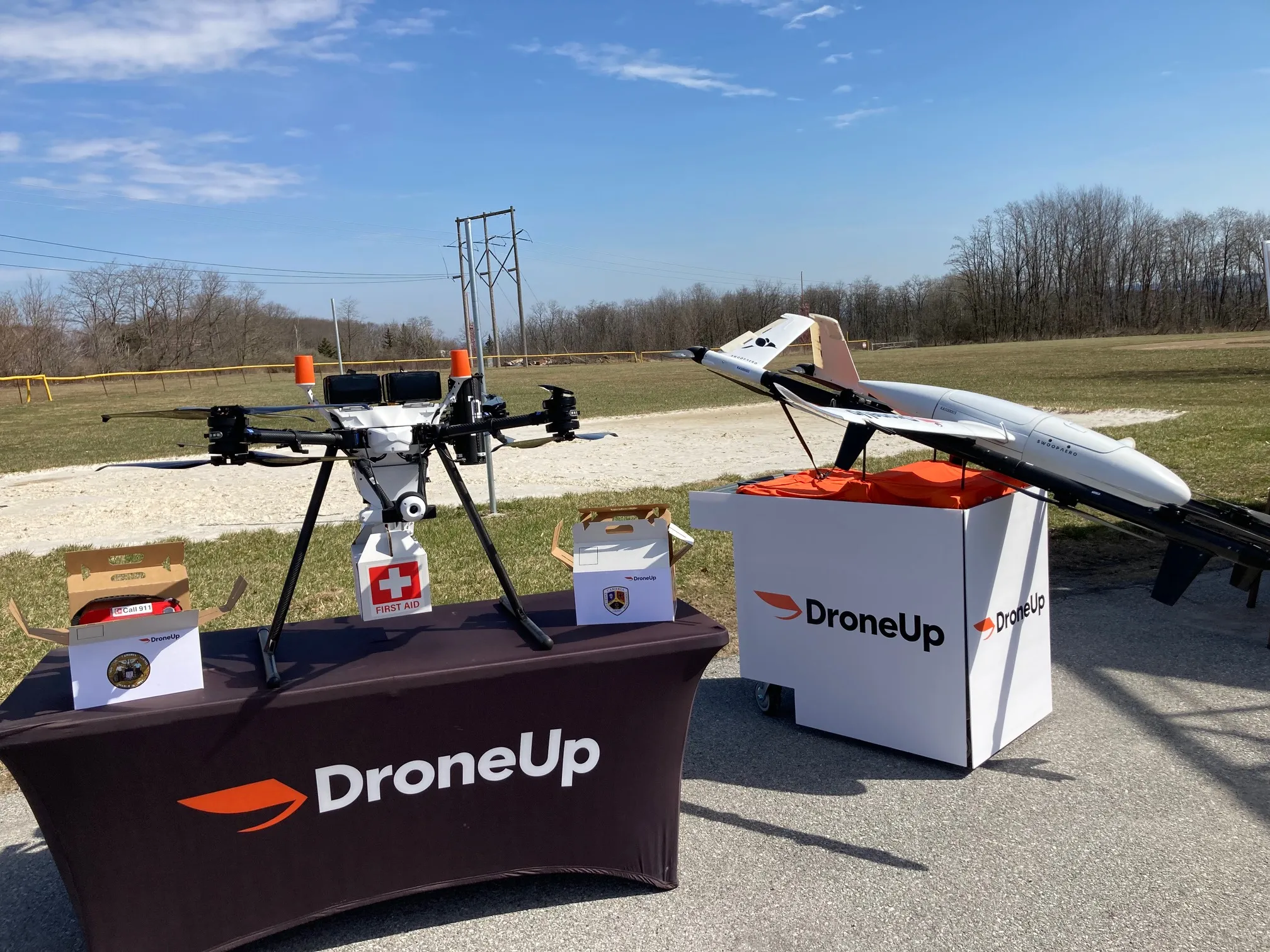

Electric air taxis and cargo drones are coming. The FAA has published design standards. Companies are taking pre-orders. States are drafting plans. But there’s a gap that almost no one is talking about: most rural municipalities have no zoning framework for vertiports.
That gap matters because zoning is where advanced air mobility meets the ground – literally. Without clear local rules, vertiport proposals will face the same delays, confusion, and NIMBYism that have stalled cell towers, wind farms, and other infrastructure projects in rural areas for decades.
This guide is for county commissioners, planning directors, and zoning boards who want to get ahead of the curve.
What Is a Vertiport?
A vertiport is a facility designed for electric vertical takeoff and landing (eVTOL) aircraft to land, take off, charge, load passengers or cargo, and park. Think of it as a helipad built for the electric age – but with charging infrastructure, passenger amenities, and potentially shared-use EV charging for ground vehicles.
Vertiports range in complexity from a simple concrete pad with a charger (a “vertistop”) to a full terminal with multiple landing pads, passenger boarding areas, and maintenance facilities. For most rural applications, the simpler end of the spectrum is what’s relevant.
The FAA released its vertiport design standards in Engineering Brief 105 (EB 105), updated to EB 105A, which provides guidance on pad dimensions, approach and departure paths, safety areas, and lighting. But EB 105A covers physical design – it doesn’t address land use, which remains firmly in local jurisdiction.
The Zoning Gap
Here’s the problem: most municipal and county zoning codes don’t mention vertiports. They may reference heliports or helistops, but the treatment is inconsistent:
- Some codes prohibit heliports outright in all zones
- Some allow them only with a Conditional Use Permit (CUP)
- Some treat them as accessory uses to hospitals, public safety facilities, or certain commercial properties
- Many simply don’t address the topic at all
When a code is silent on vertiports, any proposal triggers a variance request or zoning amendment – a process that can take months or years, involves public hearings, and creates uncertainty for developers and operators.
Why Rural Communities Should Act Now
The instinct might be to wait until someone actually proposes a vertiport. That’s a mistake, for three reasons:
First, proactive zoning attracts investment. Infrastructure developers are actively scouting communities for vertiport sites. Landings (landings.co) is building a network of 2,000 vertiports across the United States, including retrofitting existing rural airports and heliports to serve eVTOL and eSTOL aircraft. Skyports and other developers are pursuing similar strategies. A community with clear, permissive zoning signals that it’s open for business. A community where the zoning code is silent signals risk and delay.
Second, early adopters shape the terms. Writing your own vertiport zoning gives you control over where facilities go, what they look like, and what conditions apply. If you wait until a developer shows up with a proposal, you’re reacting instead of leading.
Third, the federal timeline is accelerating. The FAA’s eIPP program has selected pilot projects. Joby Aviation and Archer Aviation are nearing type certification. Electra’s eSTOL aircraft are in flight testing. The first commercial operations could begin in 2026 to 2027. Communities that have their zoning ready will be first in line.
A Framework for Rural Vertiport Zoning
Based on the FAA’s design standards, Washington State DOT’s vertiport land-use compatibility guidelines, and the American Planning Association’s AAM guidance, here’s a practical framework:
Step 1: Define the use
Add “vertiport” (and “vertistop”) as defined terms in your zoning code. A suggested definition:
Vertiport: A facility designed for the takeoff, landing, taxiing, parking, and servicing of vertical takeoff and landing (VTOL) or short takeoff and landing (STOL) aircraft, including electric-powered variants, together with associated charging infrastructure, passenger or cargo handling areas, and accessory structures.
Note the inclusion of STOL aircraft. As eSTOL technology matures, many vertiport sites will also serve short-runway planes. Building this flexibility in from the start avoids the need for future amendments.
Step 2: Determine where vertiports are permitted
For rural communities, a tiered approach works best:
- By right in aviation zones: If you have zoning districts for airports or aviation uses, vertiports should be permitted uses.
- By right or with site plan review in commercial and industrial zones: These areas typically have the infrastructure (road access, power, setbacks from residences) that vertiports need.
- Conditional Use Permit in agricultural zones: Many rural vertiport sites will be on agricultural land. A CUP process gives the community review authority while keeping the path open.
- Conditional Use Permit in residential zones (limited): Vertistops associated with medical facilities or emergency services may be appropriate near residential areas, subject to conditions.
Step 3: Establish development standards
Key standards to address:
- Setbacks: The FAA’s EB 105A defines safety areas around landing pads. Your zoning should reference these or exceed them. A minimum of 100 feet from property lines is a reasonable starting point for rural sites.
- Height: Vertiport structures are typically low-profile, but charging equipment, lighting, and any terminal buildings need height allowances.
- Noise: eVTOL aircraft are significantly quieter than helicopters, but they aren’t silent. Establish operating hour restrictions for sites near residences (e.g., 7 AM to 10 PM) and require a noise study for CUP applications.
- Lighting: FAA standards require specific lighting for landing pads. Your code should ensure this lighting doesn’t conflict with local dark-sky or nuisance-lighting ordinances.
- Approach and departure paths: The airspace above and around a vertiport must be kept clear of obstructions. Coordinate with the FAA’s 7460 process (Notice of Proposed Construction) and ensure your zoning protects these paths from encroachment.
- Charging infrastructure: Vertiports need significant electrical capacity. Address utility access and any screening requirements for transformers, battery storage, or solar installations.
Step 4: Address shared-use and multimodal potential
One of the most promising models for rural vertiports is shared infrastructure. A vertiport that also serves as an EV charging station for ground vehicles, a solar microgrid node, or a community resilience hub can generate revenue from multiple sources and justify the investment.
Your zoning should allow (or encourage) these accessory uses. Consider creating a “multimodal mobility hub” overlay district that permits combined aviation, EV charging, and distributed energy uses.
Step 5: Coordinate with state and federal programs
Several states have active AAM programs that may provide planning assistance, grant funding, or technical support:
- Texas TxDOT’s AAM Advisory Committee
- Ohio’s DriveOhio and FlyOhio programs
- North Carolina DOT’s UAS and AAM programs
- Utah’s uFLY project
Check whether your state DOT has an AAM or UAS coordinator. Many are actively seeking rural community partners.
Common Concerns and How to Address Them
“We don’t want helicopters flying over our houses.” eVTOL aircraft produce 15 to 30 dB less noise than comparable helicopters. Show residents the data – this is a meaningful difference (roughly the difference between a garbage truck and a conversation). Operating hour restrictions and defined approach paths further reduce impact.
“This will lower property values.” No data supports this claim for vertiports. In fact, improved transportation access tends to increase rural property values. The analogy to cell towers is instructive: communities that resisted towers in the 1990s didn’t preserve property values – they just fell behind in connectivity.
“We don’t have the electrical infrastructure.” This is a legitimate concern and exactly why early planning matters. Working with your electric cooperative or utility to assess capacity now – before a developer shows up – gives you time to plan upgrades. Solar microgrid models can offset grid demands.
“The FAA will handle this.” The FAA regulates aircraft operations and airspace. It does not regulate land use. Your community’s zoning code is the controlling authority for what gets built on the ground, where, and under what conditions. The FAA and your local code must work together, but neither replaces the other.
Model Language Resources
The American Planning Association published “Planning for Advanced Air Mobility” in 2024, which includes model policy language. Washington State DOT’s vertiport land-use compatibility supplement (published 2025) provides compatibility zone maps and use tables. Both are available as free downloads and are good starting points for rural communities drafting their own provisions.
The Bottom Line
Vertiport zoning isn’t glamorous work. But it’s the foundation that determines whether your community participates in the advanced air mobility revolution or watches it happen somewhere else. A few hours of planning board time now can save months of reactive scrambling later – and position your community to capture economic development that’s actively looking for a place to land.