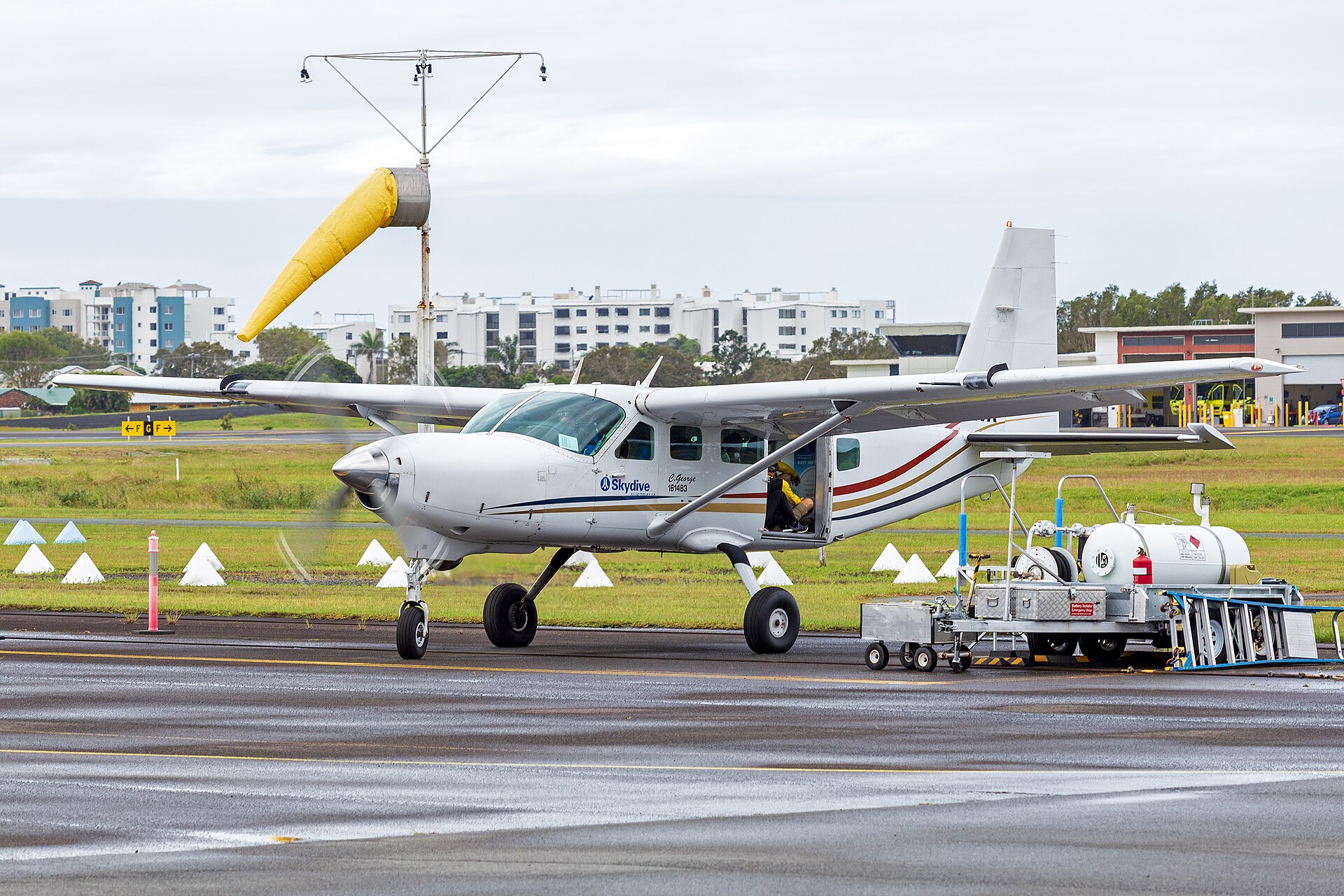
Reliable Robotics has secured a $17.4 million contract with the U.S. Air Force to integrate its fully autonomous flight system onto a Cessna 208B Caravan – the workhorse cargo and passenger aircraft that already serves hundreds of rural airports across America.
The contract, awarded through the Air Force’s logistics pipeline, tasks Reliable with adapting its autonomous system for military cargo operations. The company is also working with NASA to fly a fully automated Caravan between regional airports as part of its path to FAA certification.
The FAA has accepted Reliable’s certification plans for the autonomous system, which includes a state-of-the-art radar and the FAA’s Advanced Collision Avoidance System X (ACAS X) for autonomous traffic conflict mitigation.
Why the Cessna Caravan Matters
The choice of aircraft is as significant as the technology itself.
The Cessna 208B Caravan is not a prototype or a concept vehicle. It is one of the most widely operated utility aircraft in the world. It flies FedEx packages into small-town airports. It carries passengers on Essential Air Service routes. It delivers cargo to remote communities in Alaska and agricultural regions across the Midwest.
Reliable’s approach is fundamentally different from companies building entirely new airframes. Instead of designing a novel aircraft and then seeking certification, Reliable is adding autonomous capability to an aircraft the FAA already knows, that maintenance crews already service, and that airports already support.
This means:
- No new infrastructure required. Any airport that handles a Caravan today can handle an autonomous Caravan tomorrow.
- Existing maintenance networks apply. A&P mechanics and Part 145 repair stations that work on Caravans can service the airframe. The autonomous systems add a new layer, but the base aircraft is familiar.
- Regulatory pathway is cleaner. Certifying an autonomous system on a known airframe is a different – and arguably simpler – challenge than certifying an entirely new aircraft type.
The Rural Connection
Autonomous cargo on existing airframes is perhaps the most immediately practical form of advanced air mobility for rural communities.
Small airports stay relevant. Rural airports that currently see a handful of flights per week could become nodes in an autonomous cargo network without any physical modifications.
Pilot shortage becomes irrelevant. North America faces a pilot gap projected to peak at roughly 24,000 in 2026. Autonomous cargo operations bypass this constraint entirely for freight routes.
Economics improve overnight. Pilot compensation represents a major cost in small-aircraft operations. Removing the pilot from routine cargo runs fundamentally changes the unit economics of serving low-volume rural routes.
Essential Air Service could be transformed. The federal EAS program currently subsidizes conventional air service to small communities. Autonomous cargo and eventually passenger operations could reduce those subsidies or expand service to communities that are currently too small to qualify.
What to Watch
- Air Force testing: A yearlong test program will generate operational data on autonomous Caravan performance in real-world military logistics scenarios
- NASA partnership: Flights between regional airports will demonstrate civilian applications and generate data for FAA certification
- eIPP participation: Reliable Robotics has partnered with the City of Albuquerque on an eIPP proposal focused on autonomous cargo operations in the Four Corners region
- FAA certification timeline: The FAA’s acceptance of Reliable’s certification plans signals regulatory seriousness about autonomous fixed-wing operations
The Bottom Line
While the eVTOL world builds new aircraft for new infrastructure, Reliable Robotics is automating the aircraft that already flies the routes rural communities depend on. The Cessna Caravan is rural aviation’s backbone. Making it autonomous could be the fastest way to expand rural air connectivity without waiting for vertiports, new airframes, or novel regulatory frameworks.
Reliable Robotics is headquartered in Mountain View, California, with its commercial airline subsidiary Reliable Airlines based in Albuquerque, New Mexico. More information: reliable.co