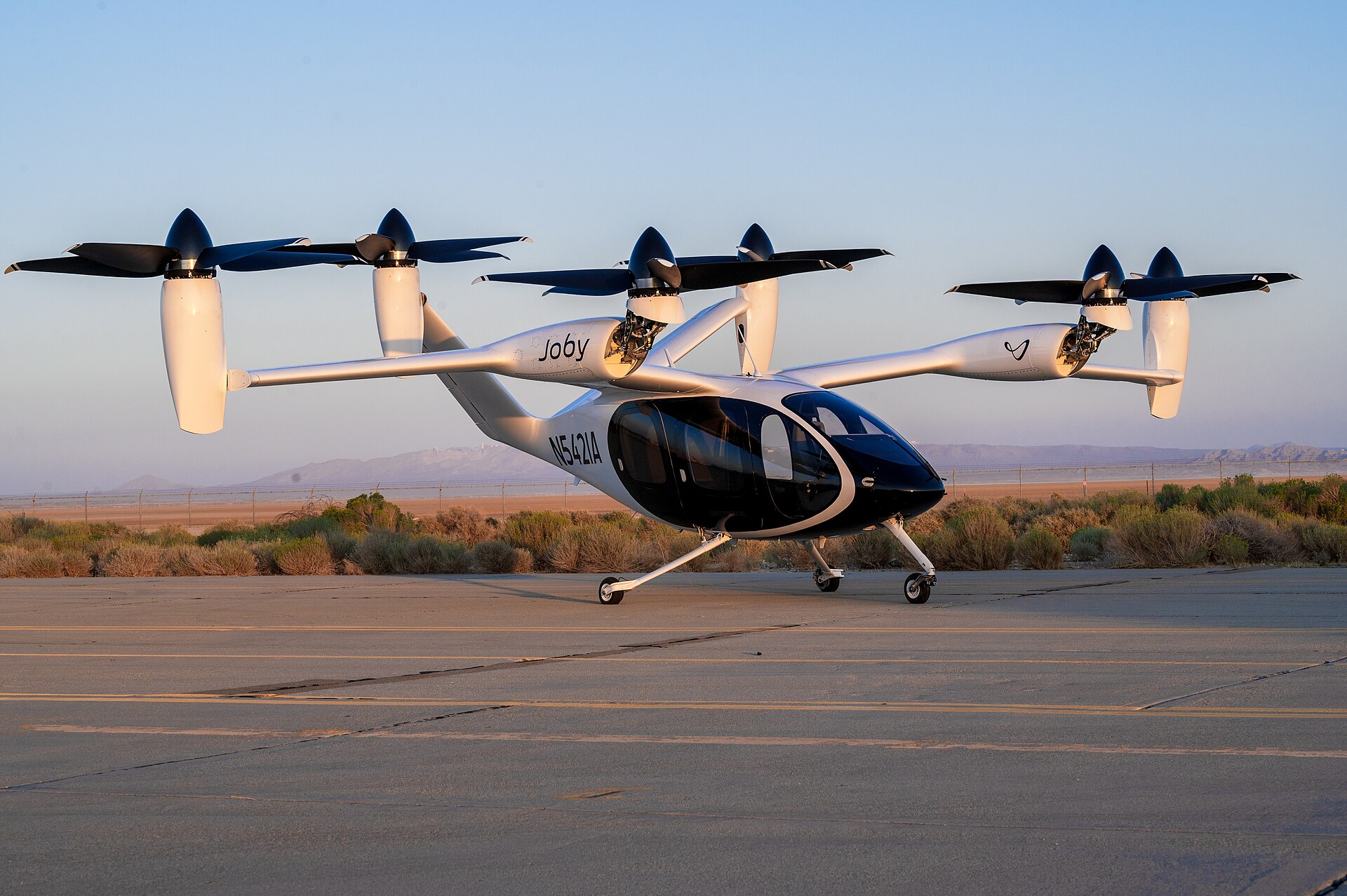

Electric short takeoff and landing (eSTOL) aircraft are emerging as one of the most practical paths to bringing advanced air mobility to rural America. Unlike their eVTOL cousins – which take off and land vertically like helicopters – eSTOL planes use short runways, typically under 300 feet, to get airborne. That distinction matters enormously for rural communities, where thousands of underused airstrips already dot the landscape.
How eSTOL Works
An eSTOL aircraft combines electric or hybrid-electric propulsion with aerodynamic techniques that generate extra lift at low speeds. The most common approach is “blown lift,” where propellers mounted along the wing blow air over the wing surfaces during takeoff and landing. This lets the plane fly at speeds as low as 25 knots – roughly 29 mph – which means it can stop and start in a fraction of the distance a conventional aircraft needs.
The result: a plane that can carry 9 to 30 passengers (or equivalent cargo) into and out of strips that are too short for conventional regional aircraft but don’t require the expensive vertical-landing infrastructure of eVTOL operations.
Why eSTOL Matters for Rural Communities
The United States has roughly 5,000 public-use airports, and the vast majority are small general aviation fields with runways under 4,000 feet. Many rural communities built these airstrips decades ago, and most see minimal traffic today. eSTOL aircraft could turn these dormant assets into viable transportation links – connecting rural towns to regional hubs for medical access, cargo delivery, and passenger service.
The infrastructure advantage is significant. While eVTOL aircraft require purpose-built vertiports with specialized landing pads, charging systems, and FAA-compliant design standards, eSTOL planes can operate from existing runways with relatively modest upgrades – mainly electric charging equipment and, in some cases, minor pavement work.
Companies Building eSTOL Aircraft
Several companies are actively developing eSTOL aircraft, each with a slightly different approach:
Electra is the current leader in the eSTOL category. Based in Virginia, Electra’s hybrid-electric aircraft uses blown-lift technology to take off in under 170 feet and land in under 114 feet of ground roll. The nine-passenger aircraft has a range of roughly 500 nautical miles and a cruise speed around 200 mph. Electra absorbed its former competitor Airflow in 2022, consolidating much of the eSTOL engineering talent under one roof. Regional carrier JSX has placed orders for 82 Electra aircraft (32 firm, 50 options).
Heart Aerospace is a Swedish company developing the ES-30, a 30-seat hybrid-electric regional aircraft designed for short-runway operations. Heart unveiled its full-scale demonstrator in early 2025 and plans a hybrid-electric flight test in 2026. The ES-30 targets routes under 200 kilometers on battery power alone, with hybrid range extending to 400 kilometers. JSX has ordered 100 units (50 firm, 50 options), and United Airlines is also an investor.
Aura Aero is a French manufacturer building the ERA (Electric Regional Aircraft), a 19-seat hybrid-electric plane powered by eight electric motors and two turbo-generators. The ERA promises up to 80% lower CO2 emissions than comparable conventional aircraft and a range of 900 nautical miles in hybrid mode. Aura Aero opened a production facility in Florida in late 2025 and holds orders from JSX for up to 150 aircraft (50 firm, 100 options).
Pyka takes a different approach – fully autonomous, all-electric, fixed-wing aircraft designed for short-field operations. Based in Alameda, California, Pyka started in agricultural spraying, building the Egret (the first human-scale autonomous electric aircraft certified for commercial work) and then the larger Pelican crop-spraying drone. The company has since expanded into cargo with the Pelican Cargo – billed as the world’s largest autonomous electric cargo airplane. Pyka’s aircraft operate from short rural strips without a pilot on board, making them a compelling option for autonomous cargo and agricultural services in areas where manned eSTOL operations may not be economically viable. The company has delivered aircraft to the U.S. Air Force through AFWERX and operates commercially in Latin America.
BETA Technologies is primarily known for its eVTOL cargo aircraft, the ALIA, but the company’s charging infrastructure – the BETA Charge Cube – is designed for multimodal use and is already being installed at airports across the country. BETA’s charging network is a key enabler for eSTOL operations, providing standardized fast-charging at smaller airfields.
The Infrastructure Play: Landings.co and the Rural Vertiport Network
One of the most interesting developments for eSTOL is happening on the ground, not in the air. Landings (landings.co) is building what it calls a rural vertiport network – a coast-to-coast system of landing sites with charging infrastructure designed so that no aircraft is more than 30 to 45 minutes from a charger.
While the term “vertiport” implies vertical-landing aircraft, some of Landings’ sites are being designed to accommodate eSTOL aircraft as well. This multimodal approach is critical. By building infrastructure that works for both eVTOL and eSTOL operations, Landings is hedging against technology risk while maximizing the utility of each site.
In September 2025, Landings announced a partnership with twelve upstate New York communities to plan what could become North America’s largest vertiport network. The project focuses specifically on rural connectivity – healthcare access, air ambulance operations, and links to regional services. CEO Lisa Wright has described the approach as positioning vertiports as “multimodal EV charging centers” that serve aircraft, rural school buses, municipal fleets, and community vehicles, distributing costs across multiple revenue streams.
eSTOL vs. eVTOL: Not a Competition
It’s tempting to frame eSTOL and eVTOL as rivals, but the reality is more complementary. eVTOL aircraft excel at point-to-point urban and suburban trips where no runway exists. eSTOL aircraft are better suited for longer routes between communities that already have airstrips – which describes most of rural America.
For rural communities, eSTOL may actually arrive sooner and at lower cost. The aircraft are closer to conventional aviation designs (which simplifies certification), and the ground infrastructure requirements are lighter. The FAA’s MOSAIC rule, which took effect in late 2025, further opens the door by expanding sport pilot privileges to cover larger aircraft – potentially including some eSTOL designs.
What to Watch
The next 18 months are pivotal. Electra is pushing toward certification of its production aircraft. Heart Aerospace plans piloted hybrid-electric flights in 2026. Aura Aero is ramping up its Florida factory. And infrastructure developers like Landings are signing community partnerships.
For rural property owners and community leaders, the practical question is straightforward: does your community have a usable airstrip? If the answer is yes, eSTOL technology could turn it into a genuine transportation asset within the next few years. Now is the time to start planning.