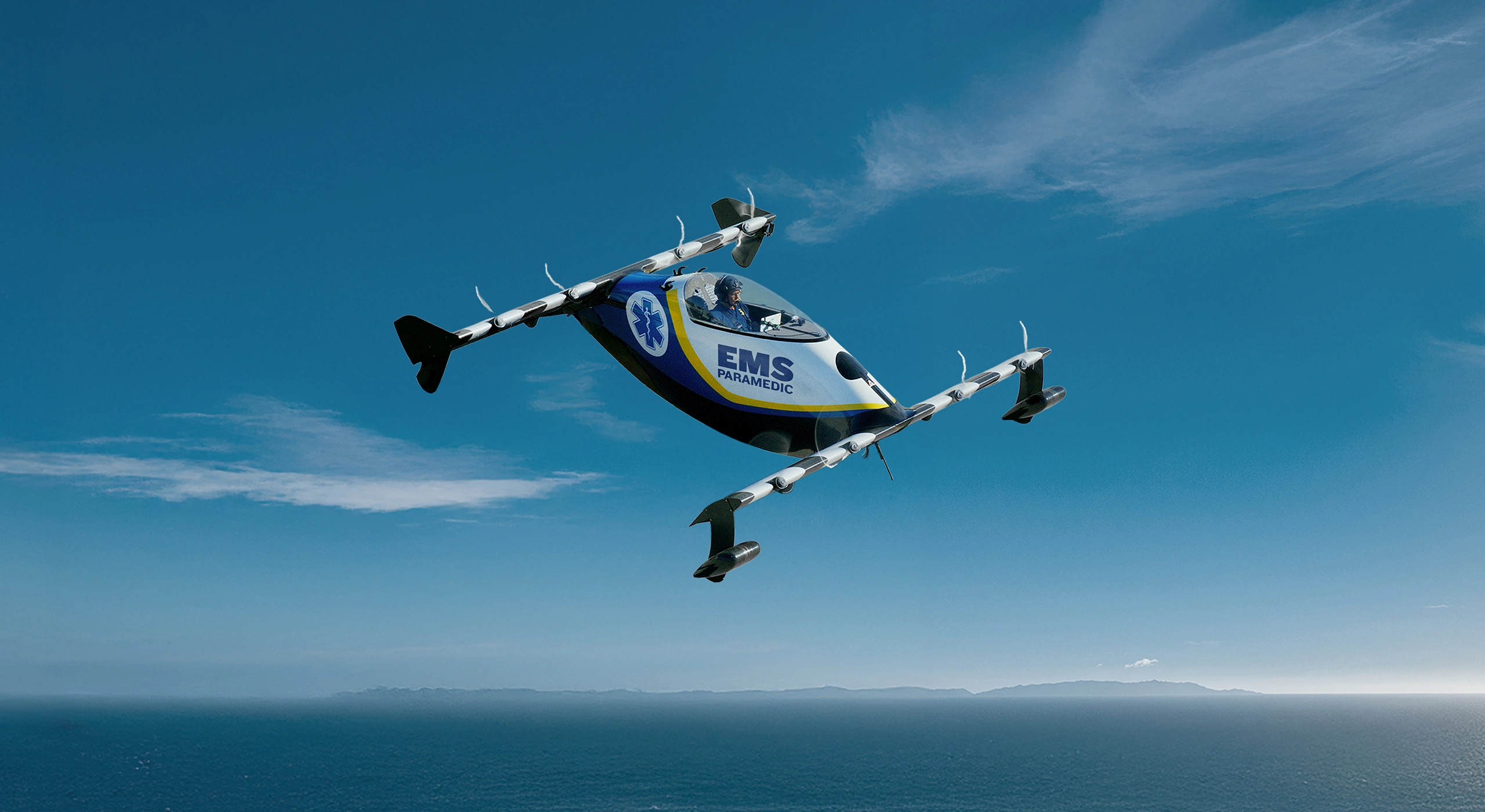
The headlines arrived almost simultaneously. Bloomberg, Wired, and Fox News all ran features in the past two weeks reaching the same conclusion: electric air taxis and cargo drones could begin limited commercial operations in the United States as early as this summer.
This isn’t speculation anymore. It’s a timeline backed by federal action and hardware that’s actually flying.
What Happened
On March 9, the U.S. Department of Transportation announced eight regional pilot projects under the eVTOL Integration Pilot Program (eIPP) – the first federal initiative designed to put new electric aircraft into everyday American airspace before full FAA type certification is complete.
The eight selected projects span 26 states and include:
- New York and New Jersey – flights from Manhattan heliports
- Texas – connections between Dallas, Austin, Houston, and San Antonio
- Florida – air taxi and cargo operations
- Albuquerque, New Mexico – autonomous cargo flights (Reliable Robotics)
- New England – regional connectivity
- Multiple additional sites across the Southeast, Midwest, and West
The participating companies read like a who’s who of AAM: Joby Aviation, Archer Aviation, Electra, Reliable Robotics, BETA Technologies, and others. Some plan passenger service. Others are starting with cargo. All are targeting operations within months, not years.
The Joby Milestone That Changed the Conversation
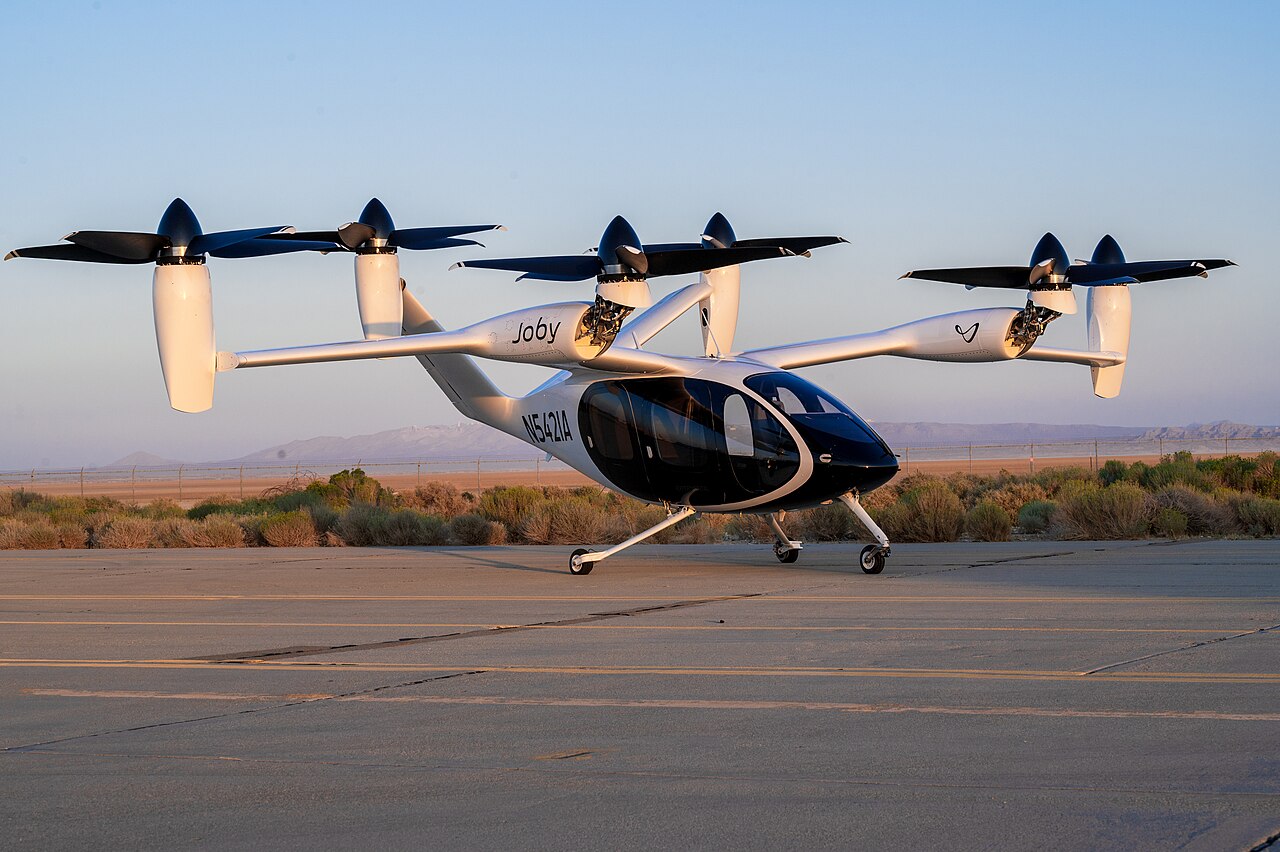
Two days after the eIPP announcement, Joby Aviation flew its first FAA-conforming aircraft (serial number N547JX) on March 11 – an aircraft built on its actual production line, not a prototype. This moved Joby into Stage 4 of the FAA certification process, where FAA test pilots fly the aircraft and the flights count directly toward type certification.
Archer Aviation CEO Adam Goldstein called the eIPP program “our Waymo moment” on an investor call – comparing it to the tipping point when autonomous cars moved from lab experiments to real streets with real passengers.
The comparison is apt. The eIPP program allows companies to begin limited, supervised operations in specific regions while final certification continues in parallel. It’s the same “prove it in the real world, then scale” model that worked for self-driving vehicles.
What the Mainstream Media Coverage Signals
When Bloomberg, Wired, and Fox News all converge on the same story in the same week, it signals a narrative shift. For years, eVTOL coverage oscillated between breathless futurism and skeptical “where are the flying cars?” pieces. The March 2026 coverage is different – it’s operational, specific, and anchored in dates and locations.
Wired noted that the aircraft in the eIPP program include both eVTOLs (like Joby and Archer) and ultra-short takeoff aircraft (like Electra’s EL9), expanding the definition of what’s about to fly. Fox News emphasized that the FAA is fast-tracking without lowering safety standards – a distinction that matters for public acceptance. Bloomberg focused on the market implications, with the eVTOL industry valued at $1.4 billion in 2025 and projected to reach $34.6 billion by 2035.
Why This Matters for Rural Communities
Most of the mainstream coverage focuses on urban air taxis – Manhattan to JFK, Dallas to Austin, city-center-to-suburb commutes. That’s where the first passenger flights will happen, and that’s where the investment attention sits.
But the rural implications of the eIPP program are equally significant, and largely overlooked by the national press. Here’s why:
The eIPP includes rural-focused projects. The Albuquerque selection specifically targets autonomous cargo flights connecting rural Four Corners communities. The Texas program includes phased expansion from urban corridors to rural medical and cargo routes. The New England project involves regional connectivity between smaller communities.
Cargo comes before passengers – and cargo is a rural need. Several eIPP participants are starting with unmanned cargo operations, not passenger service. For rural communities that struggle with supply chain access, medical delivery, and parts logistics, autonomous cargo drones operating under the eIPP framework could provide immediate, practical benefits.
The regulatory precedent matters everywhere. The operational data gathered through eIPP will inform the final rules governing eVTOL and eSTOL operations nationwide. Rural-friendly provisions – like reduced infrastructure requirements for low-density areas, streamlined approvals for cargo operations, and integration with existing small airports – will be shaped by what happens in these pilot programs.
Infrastructure is being built for rural, not just urban. Companies like Electra (whose EL9 eSTOL is in the eIPP program) are specifically designed for operations from short rural runways. Landings.co is building a 2,000-site vertiport network focused on rural communities. BETA Technologies is installing charging infrastructure at airports across the country, including smaller regional fields.
eSTOL aircraft are in the mix. The eIPP isn’t limited to vertical-landing aircraft. Electra’s inclusion means ultra-short takeoff planes – which can use the thousands of existing rural airstrips across America – are part of the program from day one. This significantly lowers the infrastructure barrier for rural communities.
What Happens Next
The summer 2026 timeline is real but narrow. Expect:
- Initial operations to be limited and supervised – demonstration flights, invited participants, restricted routes
- Cargo before passengers in most locations
- A rapid feedback loop between operators, the FAA, and local communities that will shape permanent rules
- Expansion over the three-year program from demonstration to regular service
For rural communities, the action item is the same as it’s been: get involved now. The eIPP projects need community partners. State DOTs are building AAM plans. Local zoning needs updating. The communities that are ready when the aircraft are ready will be the ones that benefit.
The flying cars aren’t coming someday. They’re coming this summer. And not all of them are headed to Manhattan.