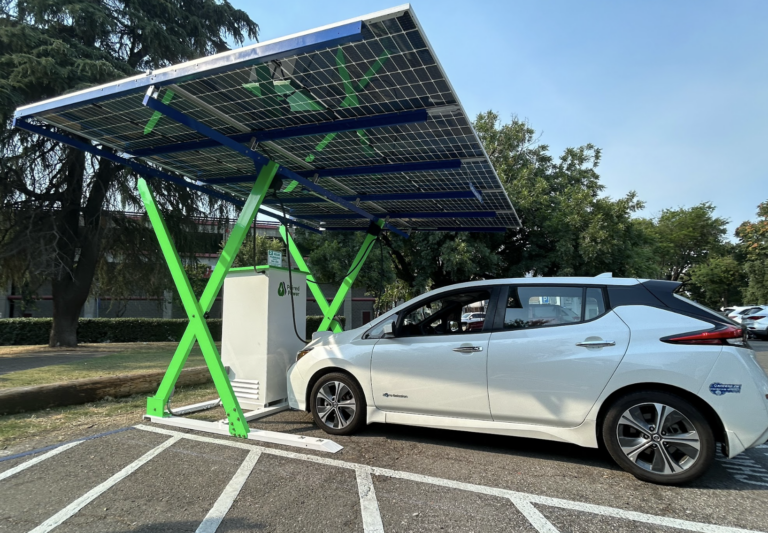
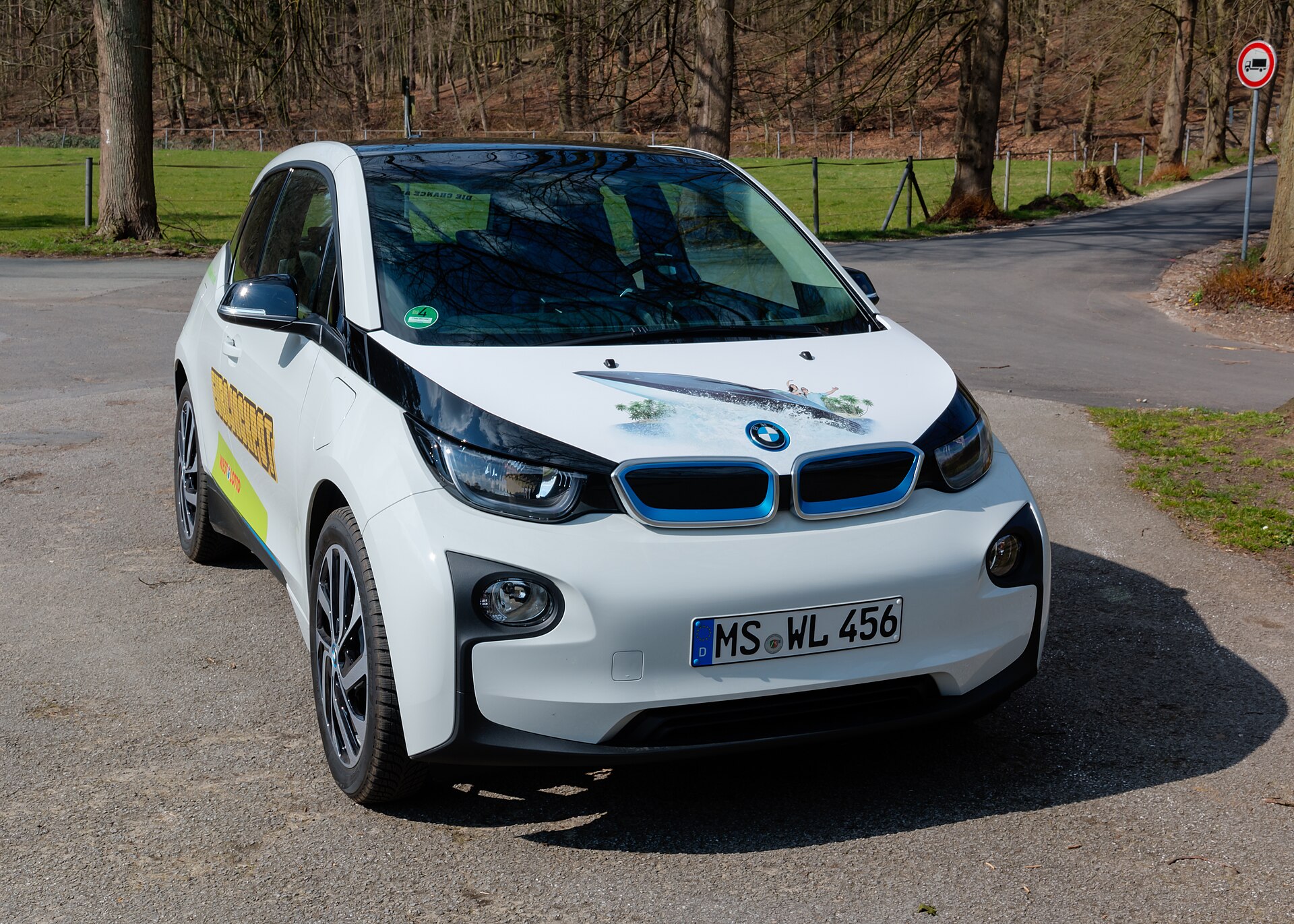
The EV Charging Summit and Expo opens tomorrow in Las Vegas — and while the agenda skews toward urban fleets and commercial real estate, a handful of speakers and companies at the show carry direct implications for rural electrification, eVTOL ground infrastructure, and last-mile delivery automation.
Here’s what’s worth tracking from the show floor.
The Event at a Glance
EVCS 2026 runs March 17-19 at Westgate Las Vegas Resort and Casino. With 200 speakers, 240 exhibitors, and more than 5,000 attendees, it is North America’s largest gathering focused exclusively on EV charging infrastructure. The agenda covers financing, grid integration, fleet electrification, and emerging technologies — categories that overlap significantly with vertiport power planning and autonomous delivery logistics.
Landings: 2,000 Rural Vertiports Need Power
One of the most consequential companies sending a team to Las Vegas this week is Landings, founded and led by Lisa Wright. Landings is building a network of more than 2,000 rural landing and charging vertiports across North America, designed so that no point is more than 45 minutes from a charger. The model is asset-light — zero upfront costs for property owners, with revenue sharing once sites go operational.
That network only works if the power infrastructure exists to support it. Each Landings vertiport requires grid-edge, medium-power charging capability — the core subject of nearly every session at EVCS this week. Wright has pointed to Walmart’s rural drone delivery expansion as direct validation of the thesis: eVTOL and drone operations are landing in exactly the rural communities where Landings is building. Just this week, Wright confirmed that priority sites are advancing toward solar co-location and battery storage partnerships. Getting 2,000 sites energized means solving rural utility interconnect, permitting, and power delivery at scale — which is precisely why Landings has team members on the floor in Las Vegas.
Pilot Flying J: The Rural Charging Bellwether
Brandon Trama, Head of Vehicle Electrification and Infrastructure at Pilot, is speaking on commercial corridor charging deployment. Pilot operates more than 750 travel centers across North America — most of them in rural and exurban locations along freight corridors. “We see our EV network as an essential service,” Trama has said. The power levels Pilot is deploying (150 to 350 kW per pad) are in the same range as eVTOL charging requirements. Shared infrastructure between truck charging and vertiport operations on rural highway corridors is not a hypothetical — it is a near-term reality.
Electric Era: The Rural-First Charging Model
Electric Era has built its business specifically around rural and underserved charging locations — small towns, highway corridors, independent retailers. The company recently commissioned a station at a Love’s Travel Stop in Buena Vista, Colorado, a rural mountain corridor between Denver and Colorado Springs. Its lightweight, grid-edge deployment model maps directly onto the site constraints rural vertiport developers face. Alex Agne from Electric Era’s business development team is on the ground at EVCS — worth a conversation if your organization is evaluating rural charging infrastructure partners.
AASHTO: The State DOT Policy Layer
Josh Rodriguez, Program Director for Environment at AASHTO, represents the state DOT perspective on charging corridor planning. State DOTs control rural highway rights-of-way — the same corridors where autonomous cargo aircraft and eVTOL routes will need ground support infrastructure. The siting frameworks being developed for EV charging corridors will directly govern where vertiports and drone hubs can go. AASHTO’s voice in that conversation matters enormously for rural AAM developers.
NASEO: Federal Funding Through State Energy Offices
Jessie Lund, Senior Program Director for Clean Transportation at NASEO, speaks to how federal infrastructure funding flows through state energy offices. NEVI and BIL funding can be directed toward multi-use rural electrification facilities — a critical pathway for communities pursuing vertiport development alongside conventional EV charging. Lund’s session is one for rural county commissioners and economic development directors to pay close attention to.
The Last-Mile Delivery Robot Angle
The fleet electrification track covers medium and heavy-duty vehicles, logistics fleets, and emerging EV categories — including autonomous ground delivery. Ground-based delivery robots require low-power charging docks at rural distribution points, plus utility interconnects and site permits. The charging and permitting frameworks being built for EV fleets at EVCS this week will directly shape what is operationally possible for autonomous last-mile delivery in small towns.
The Bottom Line
The conversations happening in Las Vegas this week will shape the power infrastructure that eVTOL operators, vertiport developers, and rural delivery networks plug into within the next three to five years. Companies like Landings are already at the table — building relationships with the utilities, charging operators, and policy officials who will determine how quickly rural electrification scales.
The summit runs through March 19. Full details at evchargingsummit.com.