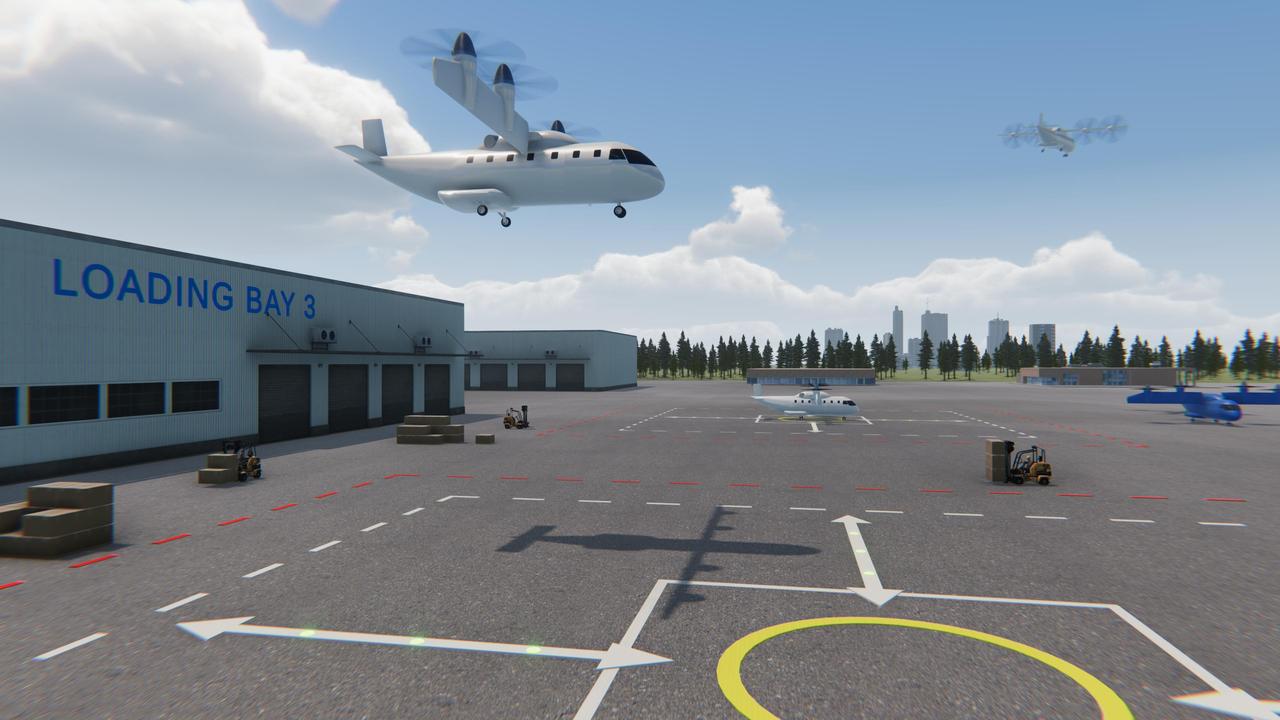
Advanced Air Mobility (AAM) had a useful week because the strongest signals were not about glossy air-taxi renderings. They were about logistics, healthcare, local infrastructure, and the unglamorous systems rural communities need before aircraft can do useful work. NASA, UNOS, and LifeNet Health tested beyond visual line of sight (BVLOS) kidney transport. Wing and Walmart named seven more U.S. drone delivery markets. Atlanta planners put power capacity and regional airports at the center of AAM planning. Vertical Aerospace added flight-test capacity for an aircraft it plans to retrofit for hybrid-electric operations. Canada’s drone sector continued moving toward agriculture, infrastructure, and remote-area commercial use.

NASA, UNOS, and LifeNet Test BVLOS Kidney Transport
The most rural-relevant story of the week came from healthcare logistics. UNOS, NASA Langley Research Center, and LifeNet Health reported successful June 5 flights carrying donated human kidneys by drone beyond visual line of sight. The flights lasted about 15 minutes, with teams monitoring temperature, pressure, and altitude while biopsying the organs before and after flight.
The early finding was direct: the flights showed no evidence of negatively affecting the organs. That matters because organ transportation is brutally time-sensitive. UNOS notes that another person is added to the U.S. transplant waiting list every eight minutes, 13 people die each day waiting for an organ, and more than 3,000 people in Virginia alone are waiting for a lifesaving transplant.
For rural hospitals, this is not a futuristic air-taxi story. It is a potential answer to geography. If future operational tests prove reliable between hospitals and airports, BVLOS drones could help smaller medical centers connect into transplant logistics networks without depending entirely on road travel, helicopter availability, or long ground-transfer times.
Wing and Walmart Expand the Largest U.S. Drone Delivery Network
Wing and Walmart named seven new major metro areas for drone delivery service: Memphis, New Orleans, Philadelphia, Phoenix, San Diego, the San Francisco Bay Area, and Salt Lake City. The expansion brings the companies toward nearly 20 U.S. markets and supports their previously stated plan to reach more than 40 million Americans by 2027.
The announcement is still city- and suburb-heavy, but rural communities should watch the operating model rather than the ZIP codes. Wing says it has completed well over one million commercial deliveries, uses drones that fly up to 60 mph, and lowers small packages by tether directly into yards and driveways in as fast as 30 minutes. That combination of store footprint, automated dispatch, and yard-level delivery is the type of model that could later matter for towns outside dense logistics corridors.
The catch is density. Drone delivery becomes easier to finance where many customers live inside a small service radius. Rural counties will need to identify use cases with higher value than convenience retail: pharmacy runs, replacement parts, lab samples, school supplies, and emergency goods. If operators prove reliability in suburbs, county leaders can start asking which routes would save real time in sparse communities.
Atlanta’s AAM Planning Puts Power Capacity and Regional Airports First
The Atlanta Regional Commission’s ConnectATL: In Focus session produced one of the clearest local-government AAM playbooks of the week. In its Advanced Air Mobility focus group, participants framed AAM as a modal choice issue, not a technology showcase. They emphasized medical and public-safety use cases before premium passenger products.
The practical takeaway was power. Participants identified electrical capacity as a limiting factor for vertiport development, especially as data-center growth strains the same grid resources. Their suggested short-term actions included statewide AAM infrastructure planning with the Georgia Department of Transportation, convening utilities with aviation stakeholders and local governments, and identifying opportunities to use smaller regional airports as AAM nodes.
That is directly transferable to rural planning. A small airport with runway access, emergency services, and available land may be a better first AAM asset than a new rooftop vertiport. But without grid capacity, charging strategy, zoning, and governance rules, even the best site becomes a drawing. Rural counties should treat AAM as an infrastructure file first and an aviation file second.

Vertical Adds a Second Valo Prototype and Keeps Hybrid Range in View
Vertical Aerospace added a second full-scale Valo eVTOL prototype to its flight-test fleet after a June 5 maiden piloted flight at its U.K. flight test center. The aircraft received a new Permit to Fly from the U.K. Civil Aviation Authority after ground testing and validation work.
The immediate benefit is more test capacity. The new prototype doubles Vertical’s flight-testing capability as the company works toward critical design review and prepares for its first pre-production aircraft. The more rural-relevant detail is what comes next: after all-electric testing, Vertical intends to retrofit this prototype for hybrid-electric flight testing.
That hybrid path matters because range and payload remain major barriers for rural logistics. All-electric aircraft may work well for short urban hops, but rural medical, cargo, and public-safety routes often require longer legs, reserve margins, and payload flexibility. Vertical’s update reinforces the point we covered in The Range Remedy: rural AAM may arrive first through aircraft that blend electric systems with range-extending propulsion rather than through pure battery air taxis.
Canada’s Drone Sector Shows the Agriculture and Infrastructure Path
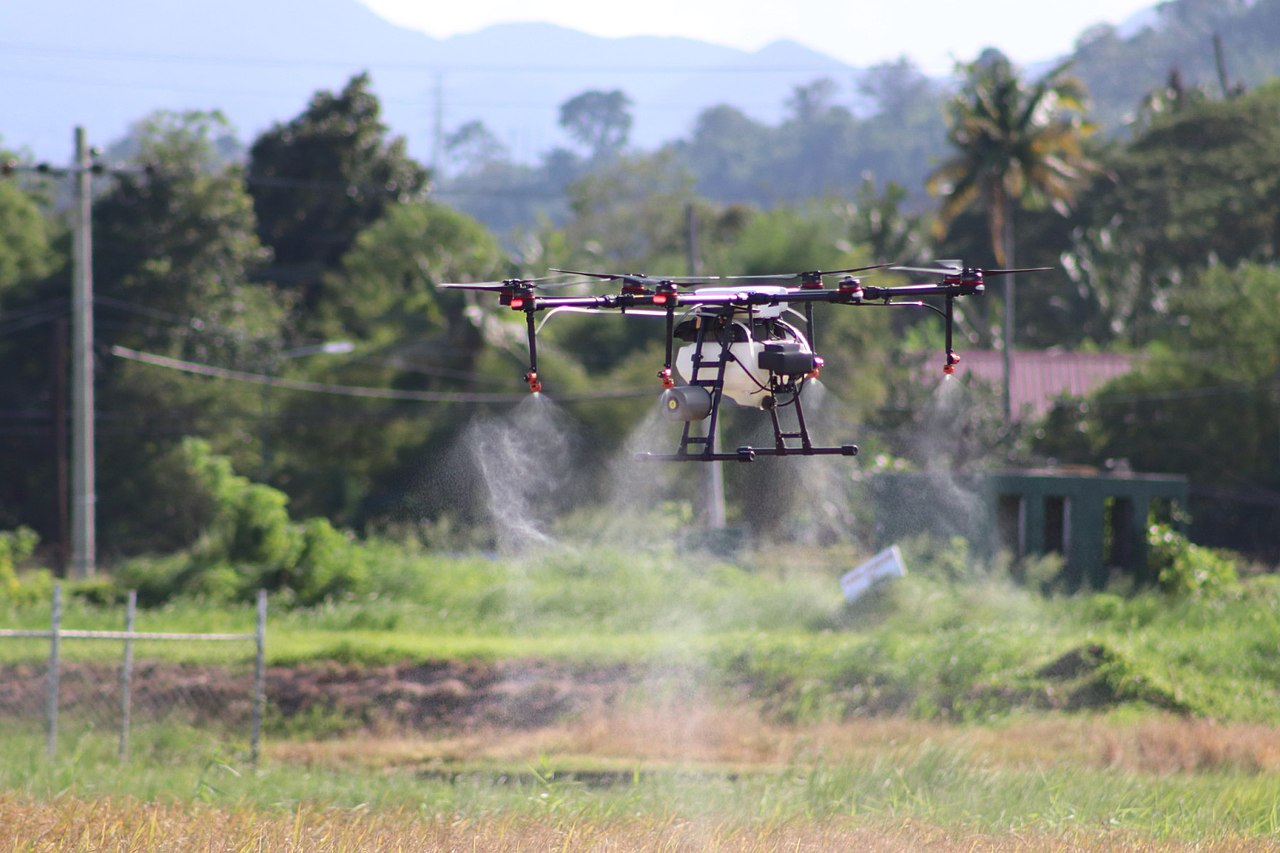
Canada offered a useful reminder that rural drone adoption will not be built on delivery alone. A Digital Journal analysis pointed to Canada’s drone sector maturing across defense, agriculture, logistics, mining, energy, and infrastructure inspection. It also highlighted regulatory changes enabling certain BVLOS operations and the June 2026 move toward broader use of spray drones for crop-protection applications.
For farmers, the value proposition is straightforward: drones can reach fields when conventional equipment cannot, target inputs more precisely, and collect data at a resolution that satellites and crewed aircraft cannot always match. For utilities and resource operators, BVLOS capability can turn drones from inspection gadgets into routine infrastructure tools across pipelines, power lines, forests, and remote assets.
The rural lesson is that regulation and business models need to mature together. If rules allow longer-range operations but local operators lack trained staff, insurance, maintenance support, or data systems, adoption stalls. Communities that want drone benefits should think beyond aircraft purchases and build the operating ecosystem around them.
What This Means for Rural Communities
This week’s AAM news points to a practical sequence for rural adoption. First come operations where time or distance has obvious value: medical logistics, infrastructure inspection, agricultural services, and emergency response. Passenger service may follow, but only after communities have worked through power capacity, site planning, airspace coordination, public trust, and workforce training.
The infrastructure message is especially clear. Atlanta’s focus on utilities and smaller regional airports lines up with the financing questions we explored in How TIF Can Help Rural Communities Build Vertiports Without Waiting for Washington. Rural leaders do not need to wait for a national air-taxi network to begin useful preparation. They can map candidate airport nodes, identify hospital and logistics corridors, review zoning, and ask utilities what charging load would actually require.
The regulatory watch item remains BVLOS. As we covered in Sky Throttles, new rules can either unlock rural utility drones or constrain them if written too narrowly. The best rural AAM projects will be the ones that connect federal rulemaking to local use cases before the final framework arrives.
Related Reading on Rural Air Mobility News
- Sky Throttles: FAA’s Impending Infrastructure Restrictions Could Shut Down Rural Utility Drones – Why BVLOS rule details matter for rural inspection and utility work
- The Range Remedy: Why Vertical’s New Hybrid-Electric Focus Matters for Rural Logistics – How hybrid-electric aircraft could solve range limits for rural missions
- How TIF Can Help Rural Communities Build Vertiports Without Waiting for Washington – A local financing path for communities planning AAM infrastructure