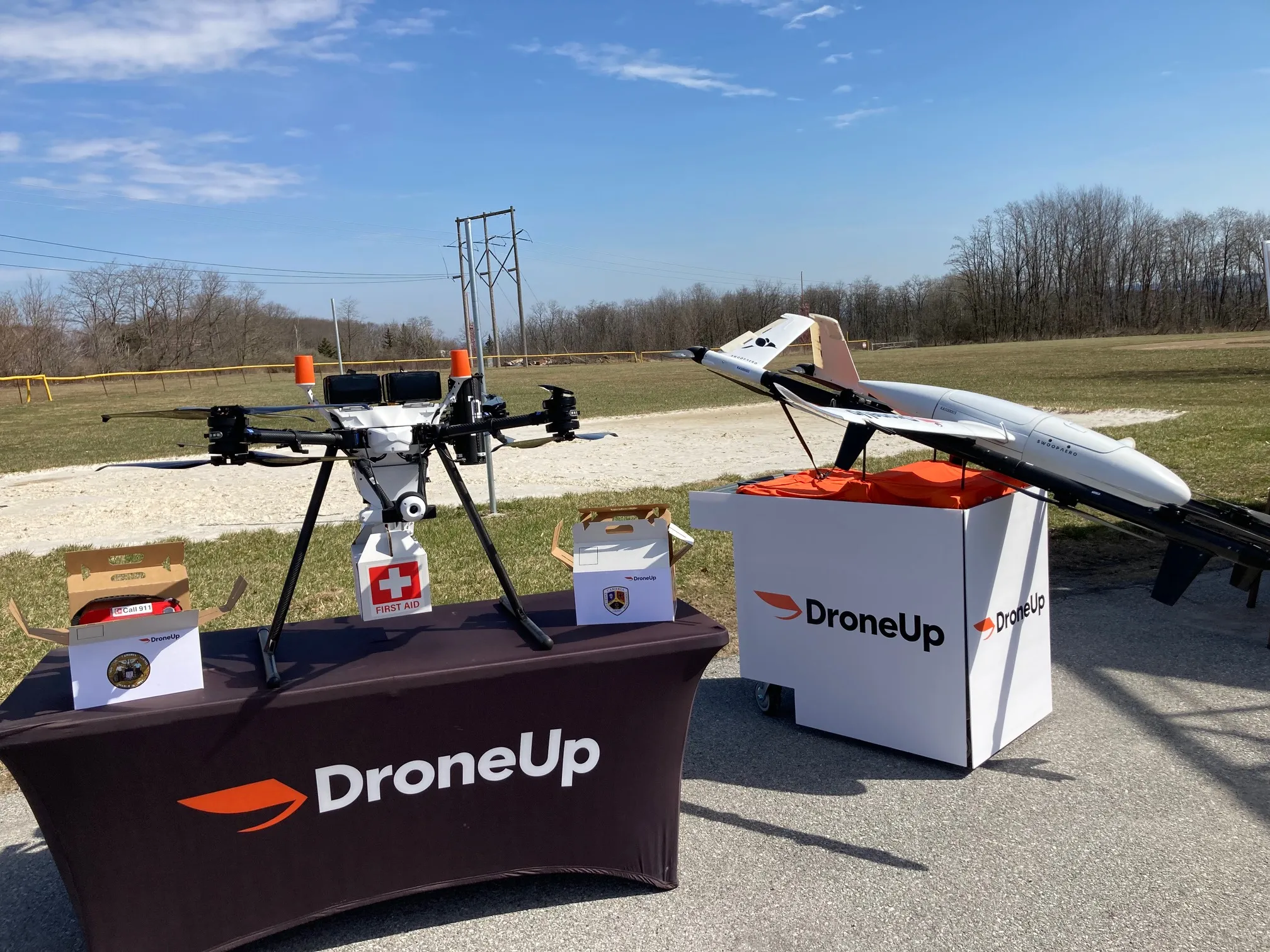
For rural communities, this week’s advanced air mobility news was less about futuristic air taxis and more about the systems that decide whether new aircraft can actually serve farms, small airports, emergency responders, and regional logistics corridors. The FAA signaled more room for commercial eVTOL activity under its integration pilot program. At the same time, drone operators saw another reminder that beyond visual line of sight (BVLOS) operations are moving into a tougher compliance era. Infrastructure and aircraft developers also pushed forward, with portable vertiports, supply-chain exemptions, and hybrid-electric test flights all shaping the timeline for rural deployment.

FAA Opens the Door Wider for Commercial eVTOL Operations
The Air Current reported that the Federal Aviation Administration now expects commercial passenger and cargo operations could occur under the eVTOL Integration Pilot Program (eIPP), potentially before full type certification. The agency told the outlet that “commercial operations were always a possibility” under the program, which is designed to inform standards and policy for advanced air mobility aircraft in the National Airspace System.
That matters for rural regions because the first practical AAM use cases may not be downtown air taxi loops. They may be demonstration corridors linking small airports, medical facilities, tribal communities, remote work sites, and logistics hubs. If commercial cargo or limited passenger activity can occur under tightly supervised pilot-program conditions, rural counties and regional airports could become testbeds sooner than a conventional certification-only timeline would allow.
The caution is equally important. Pilot-program flexibility does not remove the need for safety cases, public acceptance, noise review, local planning, and emergency response coordination. For rural leaders watching the eIPP, the opportunity is to prepare shovel-ready concepts now – not to assume aircraft will arrive without local groundwork.
BVLOS Drone Rules Are Becoming an Organizational Test
A Commercial UAV News analysis this week argued that the FAA’s BVLOS rulemaking framework, including Part 108 and Part 146 concepts, is shifting drone operations from waiver-supported experimentation toward “organization-centric, telemetry-backed regulation.” The piece also connected that shift to Remote ID enforcement, restricted sites, automated data service providers, and the FAA’s broader drone normalization strategy.
For rural operators, this is a major inflection point. Agricultural scouting, utility inspection, wildfire monitoring, public safety drone-as-first-responder missions, and medical logistics all depend on BVLOS capability. But the emerging model may reward organizations with compliance teams, telemetry systems, and capital while raising costs for volunteer fire departments, county agencies, co-ops, and small drone service providers.
That does not mean rural BVLOS is out of reach. It does mean the winning models may look more like shared service networks, regional authorities, or platform-based providers than individual pilots operating under one-off waivers. Local officials should track the rulemaking now, because procurement choices made in 2026 could determine whether a rural agency is ready for normalized BVLOS operations or stuck outside the system.
Portable Vertiports Could Fit Rural Needs Better Than Concrete
Vertical Magazine reported that Swedish design technology company STILFOLD launched STILPOD, a software-defined vertiport folded from recycled aluminum, shipped flat in a standard container, and designed to be operational in hours rather than months. The company says the system cuts embodied carbon compared with conventional concrete vertiports and can be removed without leaving a permanent footprint.
This is a notable infrastructure story for rural areas. Many small communities do not need a large permanent vertiport before demand is proven. They need lower-risk ways to test seasonal medical logistics, disaster-response staging, wildfire operations, agriculture support, or event-based passenger service near small airports and fairgrounds.
Portable vertiports will still need zoning, safety-area review, power planning, community consultation, and airspace coordination. But modular infrastructure could make the first step smaller. For counties worried about spending scarce capital on uncertain AAM demand, a movable landing and charging concept may be more realistic than a concrete-first approach.

FCC Drone Exemptions Add Clarity to a Messy Supply Chain
DRONELIFE reported that the Federal Communications Commission expanded conditional approvals for several drone systems under its Covered List framework. The May 26 public notice added systems associated with Blueflite, Verity AG, and Air VEV, with exemptions currently running through December 31, 2026.
The rural relevance is practical: many drone programs depend on aircraft, radios, flight controllers, and components that now face increased national security scrutiny. Blueflite is especially worth watching because its logistics-focused aircraft are aimed at industrial and emergency response operations – areas with clear rural applications.
For county agencies, farm service providers, utilities, and emergency managers, the lesson is procurement discipline. Buying a capable drone is no longer enough. Buyers need to understand whether the aircraft, communications stack, and components can meet current and future federal restrictions. The covered-list environment may also create openings for domestic or conditionally approved suppliers, but it can complicate budgets and replacement cycles.
Honda’s Hybrid eVTOL Test Points to Longer-Range Possibilities
Aviation Week reported that Honda’s full-scale uncrewed hybrid-electric vertical takeoff and landing demonstrator completed its first hover flight in San Luis Obispo, California, in early April. Honda is developing the aircraft with an eye toward service entry in the early 2030s.
A hybrid-electric approach is relevant for rural mobility because range, reserve energy, weather margins, and charging availability are bigger constraints outside dense urban corridors. Battery-electric aircraft may work well on short hops with reliable charging. Rural missions often involve longer distances, fewer diversion options, and thinner infrastructure.
This does not make hybrid systems a guaranteed winner. They introduce their own maintenance, emissions, certification, and cost questions. But Honda’s progress is a reminder that rural AAM may not be one technology. The future network could include battery-electric cargo drones, hybrid-electric passenger aircraft, eSTOL aircraft using short runways, and autonomous conventional aircraft operating from existing airports.
What This Means for Rural Communities
This week’s signal is clear: rural AAM is becoming more operational and less speculative, but the bar for participation is rising. FAA flexibility under the eIPP could accelerate real-world demonstrations, while BVLOS and FCC developments show that compliance, supply-chain security, and telemetry will shape who gets to fly.
For rural leaders, the immediate action is not to wait for aircraft certification headlines. It is to map use cases, identify likely launch sites, review zoning, plan charging and backup power, and build partnerships with operators that can meet emerging regulatory requirements. Small airports, emergency management agencies, utility districts, hospitals, tribal governments, and agricultural co-ops should be in the same planning conversation.
The biggest opportunity is to avoid an urban-first AAM rollout by showing that rural missions are practical, measurable, and socially useful. The biggest risk is that compliance costs and infrastructure uncertainty leave small communities dependent on outside providers with little local control. Next week, watch for more FAA guidance on pilot-program participants, continued BVLOS rule debate, and additional infrastructure concepts aimed at lowering the cost of entry.
Related Reading on Rural Air Mobility News
- Joby’s NYC Flights Grabbed the Headlines. The Real eIPP Story Is Playing Out in Rural America. – why the federal pilot program matters beyond major cities
- FAA Part 108: The BVLOS Rule That Could Unlock Rural Drone Operations – background on the rule framework affecting rural drone missions
- Vertiport Zoning for Rural Communities: A Practical Guide for Local Officials – how local governments can prepare for landing-site decisions
- What Is eSTOL? The Electric Short-Takeoff Aircraft Poised to Revive Rural Airports – why rural AAM may include more than eVTOL aircraft