For years, advanced air mobility (AAM) coverage has centered on aircraft promises and urban air-taxi launch dates. This week offered a more useful test: whether the technology is beginning to solve the distance, infrastructure, workforce, and logistics problems that define rural aviation. A North Carolina county used an eVTOL to put a paramedic at a 911 scene faster than an ambulance; Utah’s hybrid-electric demonstration reached a high-altitude regional airport without ground charging; and Florida paired a test facility with a manufacturing and training push.

1. North Carolina puts an eVTOL into real emergency response
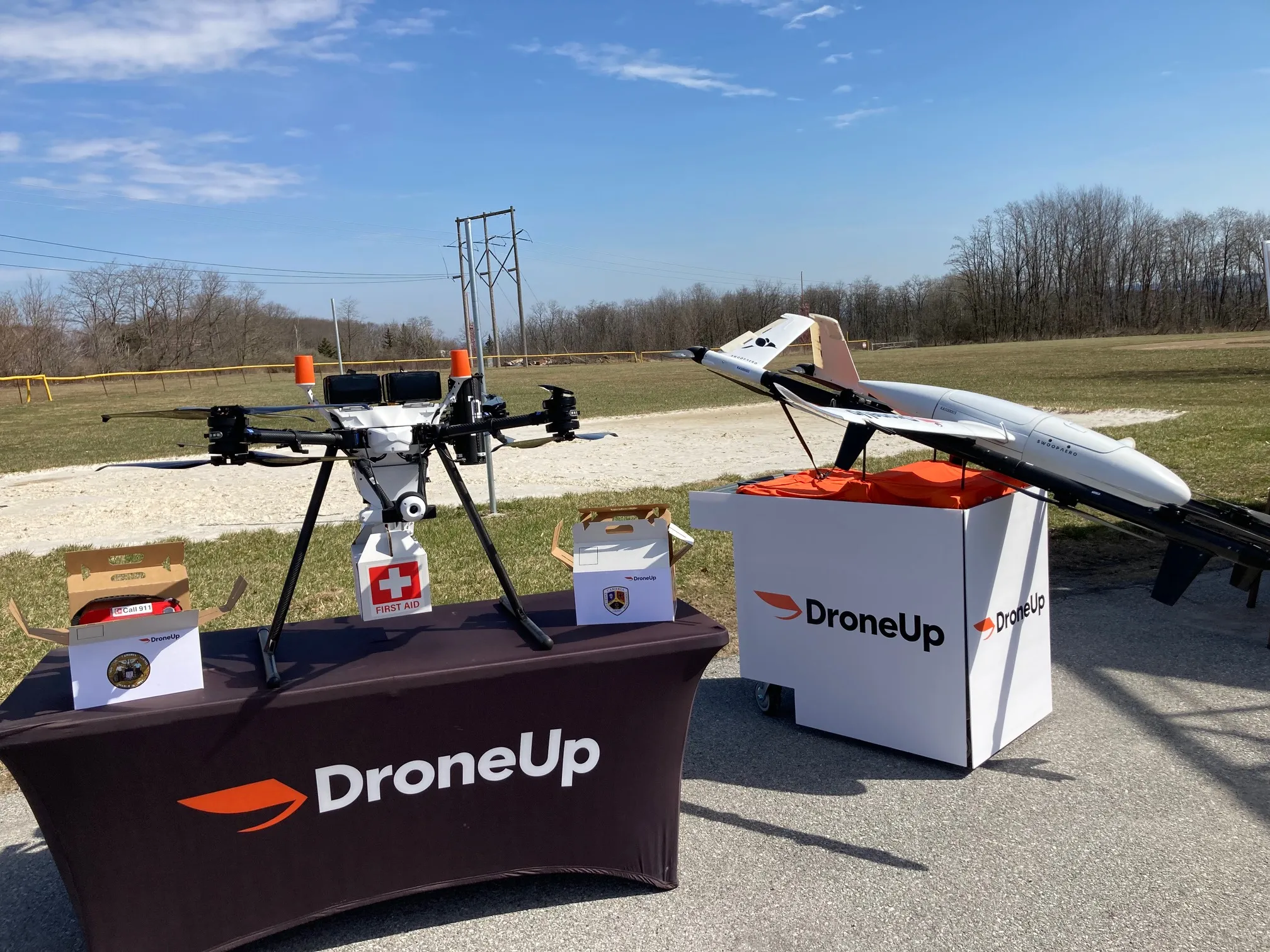
Hyde County Emergency Medical Services says it has completed the first U.S. deployment of a paramedic by eVTOL aircraft in response to a 911 call. The Pivotal aircraft carried flight-trained paramedic Quinn Reece directly to GPS coordinates with a cardiac monitor, airway supplies, and a primary response bag. In one of two missions described by the county, the aircraft landed about 20 minutes before a ground ambulance.
The rural significance is straightforward. Hyde County covers nearly 1,500 square miles of land and water, where distance can delay advanced life support even when an ambulance is moving. The program required more than 300 training exercises, a concept of operations, aviation program management, and coordination among Hyde County EMS, Pivotal, Code Blue Resources, and Akute Networks. That makes this more than an aircraft demonstration: it is a replicable operating model, although regulators and local agencies will still need to assess weather, pilot qualification, maintenance, landing-site access, and patient handoff procedures.
Source: Vertical Magazine’s report on the Hyde County EMS missions and Flying’s coverage.
2. Ampaire’s Utah flight targets airports that cannot justify chargers
Ampaire’s hybrid-electric Electric EEL flew 240 miles from Salt Lake City International Airport to Cedar City Regional Airport on August 6, according to coverage published this week. The converted Cessna 337 used its combustion engine to recharge the battery in flight, allowing it to arrive without relying on a high-voltage ground charger. The flight was conducted under Utah’s uFLY initiative, part of the FAA’s eVTOL Integration Pilot Program, and tested the aircraft across a high-altitude desert corridor.
For rural airport managers, the most important metric is not the aircraft’s novelty. It is the infrastructure avoided. All-electric aircraft can make excellent sense at airports with predictable volume and capital for charging, but many smaller airports serve modest populations and intermittent cargo, medical, or passenger demand. A hybrid aircraft that can use existing runways and fuel systems could provide an earlier path to regional service while utilities, airport sponsors, and operators build a longer-term electrification plan. It also reinforces a point we made in our guide to eSTOL aircraft and rural airports: propulsion architecture and airport economics have to be evaluated together.
Source: Tech Times’ report on the Electric EEL flight.
3. Florida turns SunTrax into a rural-relevant AAM test and workforce hub
Florida Governor Ron DeSantis highlighted SunTrax AirGround in Polk County this week, with the state saying eVTOL testing will begin by the end of 2026. The 775-acre campus, operated by the Florida Department of Transportation, includes dedicated AAM airspace, an aerial test track, charging, and hangar capacity. FDOT is also working with Embry-Riddle Aeronautical University and Polk State College on training for pilots, maintenance technicians, engineers, and other transportation workers.
The rural angle is the institutional model. AAM will need more than aircraft certification to reach smaller communities; it will need technicians, dispatchers, first responders, and local officials who understand how the systems operate. SunTrax’s location along the I-4 corridor is not itself a rural deployment, but Polk County gives the program a regional setting where manufacturing, testing, education, and state transportation planning can connect. Rural counties watching the program should track which credentials are created, whether training is accessible outside major metro areas, and how test data informs local siting and emergency-response rules.
Source: Florida’s official announcement.
4. AIR chooses Florida for U.S. production, flight operations, and cargo
AIR announced a partnership with FDOT to establish its U.S. headquarters and an eVTOL production and flight-operations hub at SunTrax. The company says it has leased about 20,000 square feet, will move flight testing there, and plans to begin U.S. manufacturing of its AIR ONE personal eVTOL and autonomous heavy-lift cargo aircraft by the end of 2026. SunTrax’s facilities include vertiports, charging stations, and maintenance hangars, while AIR says it intends to hire locally.
Production geography matters to rural communities because it determines where maintenance, supplier, and technician networks develop. The immediate jobs will be concentrated around the facility, but the broader question is whether a Florida-based production and operations hub can support regional cargo use cases rather than only personal or urban air-taxi markets. The company’s cargo aircraft plans are the part to watch: rural operators generally need dependable freight, medical, agricultural, and public-safety missions before they need premium passenger service.
Source: Vertical Magazine’s report on the AIR-FDOT partnership and Aviation Week’s coverage.
5. Archer’s Boeing deal combines eVTOL, UAS, autonomy, and airspace tools
Archer and Boeing announced definitive agreements under which Archer will acquire Wisk Aero, SkyGrid, and Insitu, subject to closing conditions and regulatory review. The combination would bring together Wisk’s autonomous eVTOL work, SkyGrid’s ground-based air-traffic-management platform, and Insitu’s uncrewed aircraft systems with Archer’s aircraft and artificial-intelligence programs. The companies cite nearly two million combined flight hours across the businesses.
That matters for rural deployment because the hard problem is not simply building an aircraft. Rural cargo and emergency missions need aircraft, command-and-control, route planning, detect-and-avoid capability, maintenance, and a way to coordinate multiple operations in lower-density airspace. A vertically integrated platform could reduce the number of vendors a county or regional operator must stitch together, but consolidation also raises questions about interoperability, pricing, and whether the combined company will prioritize public-service and cargo missions alongside air taxis. We will be watching the transaction’s closing timeline, its effect on Wisk’s Texas eIPP plans, and how SkyGrid’s tools fit into FAA integration work.
Source: Vertical Magazine’s report on the transaction.
What This Means for Rural Communities
This week’s five stories point to a more practical AAM agenda. The strongest near-term use cases are not generic flying-car commuting; they are time-critical emergency response, cargo, and regional connections that can justify aviation’s speed. Hyde County’s missions show that the value proposition can be measured in minutes to advanced care. Ampaire’s Utah flight shows that aircraft design can reduce the infrastructure burden at smaller airports. Florida’s SunTrax program shows that workforce and testing capacity are prerequisites, not afterthoughts.
For county officials and rural airport sponsors, the next step is to build a local readiness list: identify potential landing sites, emergency-response partners, grid capacity, maintenance needs, and training providers. For fleet managers, compare all-electric, hybrid-electric, and conventional aircraft on total system cost rather than energy source alone. For farmers, utilities, and logistics operators, the FAA’s developing beyond visual line of sight (BVLOS) framework remains central to scaling drone work; recent commentary continues to describe Part 108 as unfinished, so operators should not treat headlines about a final rule as a substitute for an official FAA publication.
The measurement to watch next is operational repetition. One emergency mission, one regional flight, or one announcement can prove feasibility. A rural air-mobility system becomes credible when the same route, aircraft, crew, and landing site perform safely and economically across seasons, weather, maintenance cycles, and real community demand.